
ITIL Continual Service Improvement   76-slide PPT PowerPoint presentation slide deck (PPTX)
$65.00

ITIL Continual Service Improvement (76-slide PPT PowerPoint presentation slide deck (PPTX)) Preview Image
Log in to unlock full preview.
ITIL Continual Service Improvement (76-slide PPT PowerPoint presentation slide deck (PPTX)) Preview Image
Arrow   Click main image to view in full screen.

ITIL Continual Service Improvement (PowerPoint PPTX Slide Deck)

PowerPoint (PPTX) 76 Slides

$65.00

Add to Cart


Immediate download
Fully editable PowerPoint
Free lifetime updates

BENEFITS OF THIS POWERPOINT DOCUMENT

  1. Service Improvement
  2. Improved Business Change Culture
  3. Value for Money

ITIL PPT DESCRIPTION

Editor Summary 76-slide PowerPoint presentation titled ITIL Continual Service Improvement by Dartview Consulting that outlines the ITIL V3 CSI approach, including the ITIL Service Life-Cycle, Utility & Warranty, benchmarking, SWOT, and the Seven-Step Improvement Process. Read more

This document is a 76-slide PowerPoint presentation that provides an overview of Continual Service Improvement using the ITIL V3 Best Practice Framework.

Packed with key information and graphics, and easy to customise

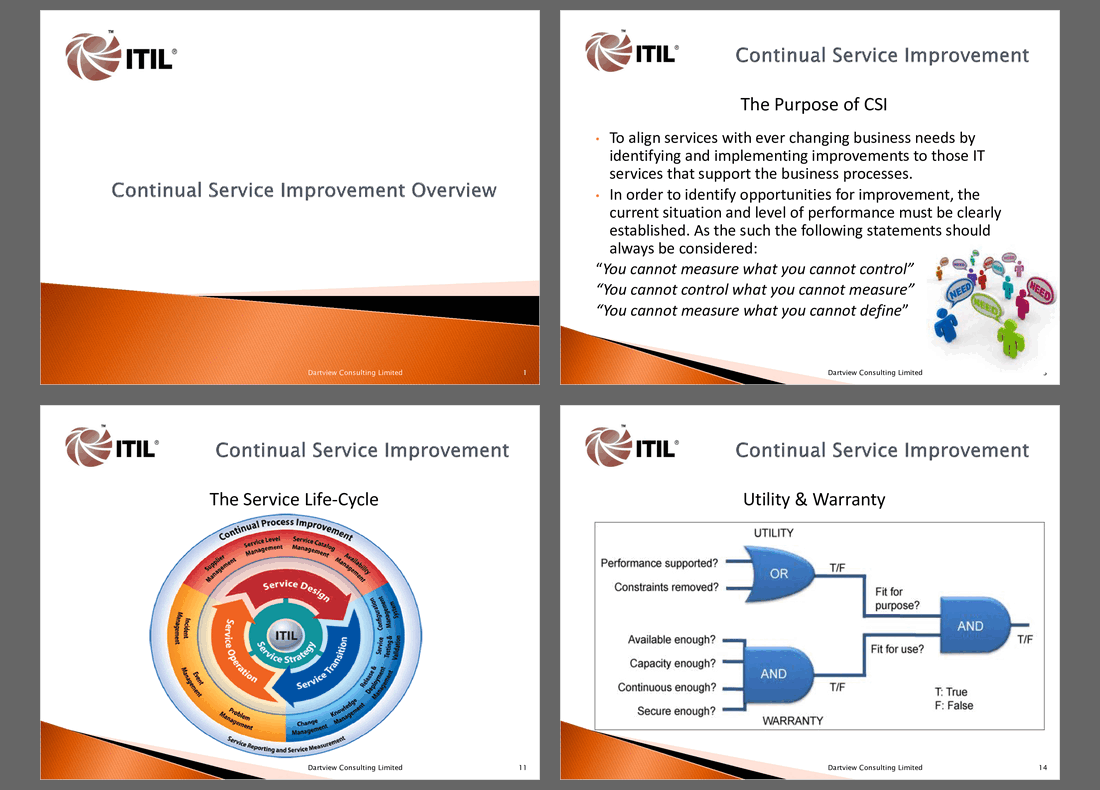
Utility & Warranty, Benchmarking, Gap Analysis, SWOT, RACI, 7-Step Improvement Process, Roles & Resources, Technology Requirements, etc.

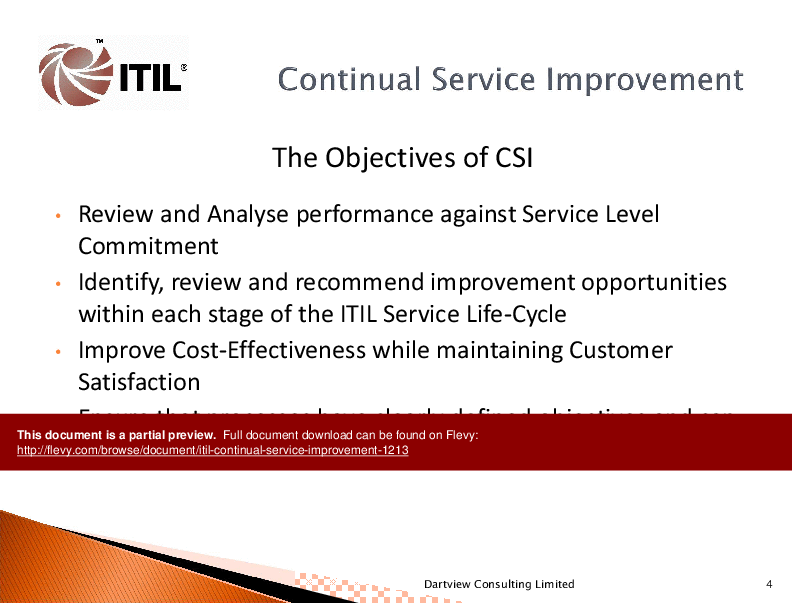
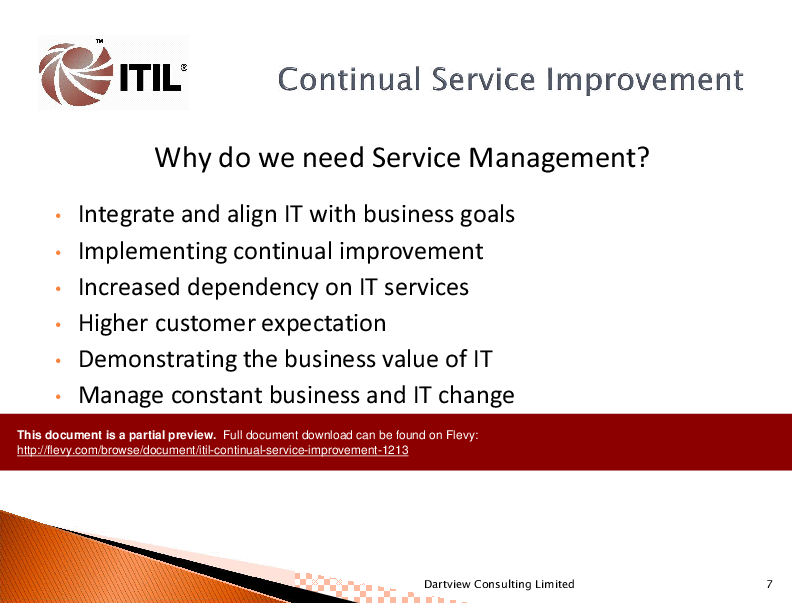
The ITIL Continual Service Improvement (CSI) presentation is an essential resource for executives aiming to align IT services with business objectives. It emphasizes the importance of integrating IT with business goals, managing constant changes, and demonstrating the business value of IT. The PPT outlines a comprehensive approach to service management, ensuring higher customer satisfaction and cost-effectiveness.

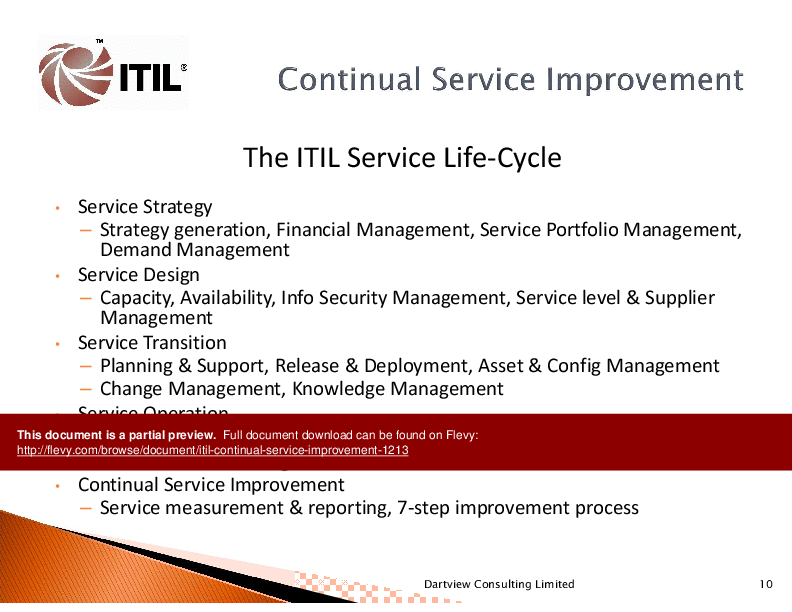
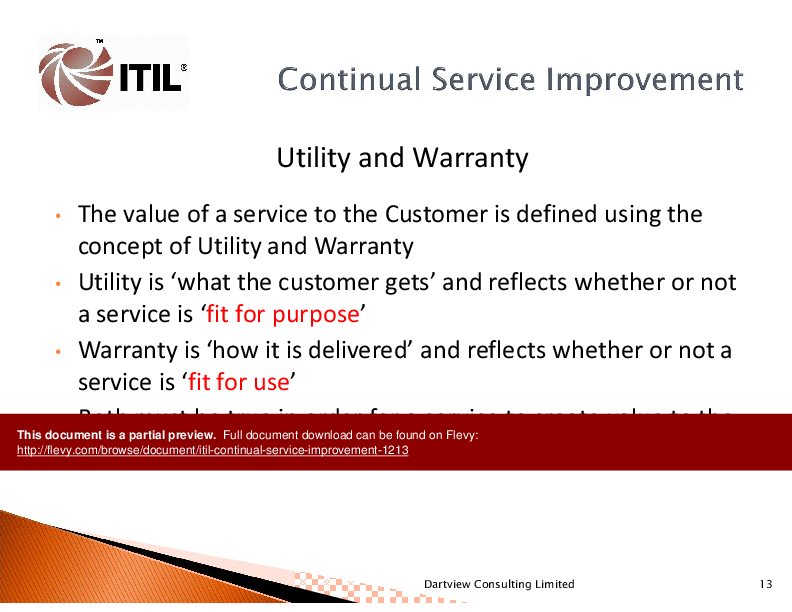
The presentation delves into the ITIL Service Life-Cycle, covering key areas such as Service Strategy, Service Design, Service Transition, and Service Operation. It also highlights the critical role of Utility and Warranty in defining service value, ensuring services are both 'fit for purpose' and 'fit for use.' The 7-Step Improvement Process is meticulously detailed, guiding organizations through identifying strategies, processing data, and implementing improvements.

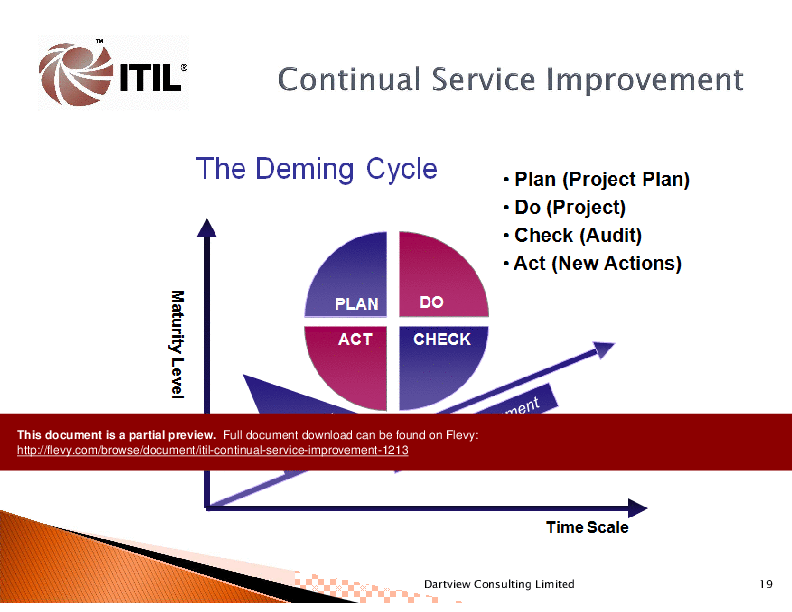
The document also addresses the importance of benchmarking, SWOT analysis, and the Deming Cycle in driving continual improvement. It provides insights into the roles and skills required at each step of the improvement process, ensuring that organizations are well-equipped to execute their CSI initiatives effectively. The inclusion of technology requirements and key suppliers further supports the implementation of CSI activities, making this presentation a valuable tool for any organization committed to continual service improvement.

Got a question about the product? Email us at support@flevy.com or ask the author directly by using the "Ask the Author a Question" form. If you cannot view the preview above this document description, go here to view the large preview instead.

MARCUS OVERVIEW

This synopsis was written by Marcus [?] based on the analysis of the full 76-slide presentation.


Executive Summary
The ITIL Continual Service Improvement (CSI) presentation is a comprehensive resource designed to help organizations enhance their IT services in alignment with business objectives. This deck outlines the fundamental principles and processes of CSI, emphasizing the importance of measuring performance, identifying improvement opportunities, and implementing effective changes. By leveraging the ITIL framework, executives and consultants can ensure that IT services are continuously refined to meet evolving business needs, ultimately driving customer satisfaction and operational efficiency.

Who This Is For and When to Use
•  IT Service Managers responsible for service delivery and improvement initiatives
•  Business Analysts focused on aligning IT services with business goals
•  IT Executives seeking to implement best practices in service management
•  Consultants advising organizations on IT service enhancements
•  Process Owners accountable for specific IT service processes

Best-fit moments to use this deck:
•  During strategic planning sessions to align IT services with business objectives
•  When initiating a CSI program to establish a baseline for service performance
•  In workshops aimed at training teams on the ITIL CSI framework and processes
•  To guide discussions on service improvement opportunities and resource allocation

Learning Objectives
•  Define the principles and objectives of Continual Service Improvement (CSI)
•  Establish a baseline for measuring current service performance
•  Identify and prioritize improvement opportunities within the ITIL Service Life-Cycle
•  Implement the Seven-Step Improvement Process effectively
•  Analyze data to derive actionable insights for service enhancements
•  Communicate improvement plans and engage stakeholders effectively

Table of Contents
•  Purpose & Objectives (page 2)
•  Service Management and ITIL Service Life-Cycle (page 3)
•  Utility & Warranty (page 12)
•  CSI Principles (page 15)
•  CSI Processes (page 23)
•  CSI Methods & Techniques (page 31)
•  Resourcing for CSI (page 40)
•  Technology Requirements (page 58)
•  Implementing CSI (page 68)
•  Challenges, Risks and Critical Success Factors (page 70)

Primary Topics Covered
•  Purpose of CSI - Aligns IT services with business needs by identifying and implementing improvements.
•  ITIL Service Life-Cycle - Describes the stages of service strategy, design, transition, operation, and continual improvement.
•  Utility and Warranty - Defines how services deliver value to customers through fitness for purpose and fitness for use.
•  Seven-Step Improvement Process - A structured approach to identify, measure, analyze, and implement service improvements.
•  Benchmarking - Evaluates organizational processes against best practices to identify improvement areas.
•  SWOT Analysis - Analyzes strengths, weaknesses, opportunities, and threats to inform strategic decisions.

Deliverables, Templates, and Tools
•  Service performance measurement templates for establishing baselines
•  Gap analysis frameworks to identify discrepancies between current and desired performance
•  SWOT analysis templates for strategic planning sessions
•  RACI matrix templates for clarifying roles and responsibilities in CSI initiatives
•  Reporting dashboards for visualizing service performance metrics
•  Improvement action plans to guide implementation efforts

Slide Highlights
•  Overview of the ITIL Service Life-Cycle, illustrating the integration of CSI within service management.
•  Utility and Warranty slide explaining the dual aspects of service value delivery.
•  The Seven-Step Improvement Process flowchart, detailing each step from strategy identification to implementation.
•  Benchmarking and Gap Analysis slides that provide frameworks for assessing service performance.
•  RACI matrix example clarifying roles in the CSI process.

Potential Workshop Agenda
Introduction to CSI (30 minutes)
•  Overview of CSI principles and objectives
•  Discussion on the importance of aligning IT services with business needs

Seven-Step Improvement Process (60 minutes)
•  Detailed walkthrough of each step in the improvement process
•  Group activity to identify potential improvement areas in current services

Data Analysis and Reporting (45 minutes)
•  Techniques for gathering and analyzing service performance data
•  Creating effective reports for stakeholders

Implementation Planning (30 minutes)
•  Developing action plans based on identified improvements
•  Establishing roles and responsibilities using the RACI matrix

Customization Guidance
•  Tailor the presentation to reflect specific organizational goals and service contexts.
•  Update case studies and examples to align with the audience's industry or sector.
•  Adjust metrics and KPIs based on current service performance data.
•  Incorporate organizational terminology and branding for consistency.

Secondary Topics Covered
•  Challenges in implementing CSI and overcoming resistance to change
•  Critical success factors for effective CSI initiatives
•  Role of technology in supporting CSI activities
•  Importance of stakeholder engagement in the improvement process
•  Continuous monitoring and adjustment of service improvement initiatives

Topic FAQ

What are the core phases of the ITIL Service Life-Cycle?

The ITIL Service Life-Cycle describes stages through which services progress: Service Strategy, Service Design, Service Transition, Service Operation, and Continual Service Improvement. Each phase defines activities for planning, delivering, and supporting services, ending with continual refinement as described in the Service Life-Cycle sequence.

What does the Seven-Step Improvement Process involve in CSI?

The Seven-Step Improvement Process provides a structured approach: identify strategy for improvement, define what to measure, gather and process data, analyze information, present findings, and implement improvements. It is used to move from performance measurement to actionable service change using the Seven-Step Improvement Process.

How do Utility and Warranty affect how services deliver value?

Utility defines a service’s fitness for purpose (functionality that meets needs) while Warranty ensures fitness for use (reliability, capacity, continuity). Both dimensions are required to create customer value; effective CSI examines both Utility and Warranty when assessing service value and improvement opportunities.

How can organizations measure service performance effectively?

Effective measurement requires clear metrics and KPIs, regular assessments, benchmarking against best practices, and visual reporting. Organizations should establish baselines, collect and analyze data, and use reporting dashboards to communicate performance trends and gaps, supported by service performance measurement templates.

What should I look for in an ITIL CSI presentation or toolkit when purchasing one?

Look for explicit coverage of the ITIL Service Life-Cycle and the Seven-Step Improvement Process, practical templates (service measurement, RACI, gap analysis, SWOT), guidance on technology requirements, and workshop agendas. A useful toolkit should include service performance measurement templates, a RACI matrix, and gap analysis frameworks.

How much time and team effort is suggested for an introductory CSI workshop using a presentation?

A suggested workshop agenda breaks sessions into concise modules: Introduction to CSI (30 minutes), Seven-Step Improvement Process walkthrough (60 minutes), Data Analysis and Reporting (45 minutes), and Implementation Planning (30 minutes). These segments guide workshops using the ITIL Continual Service Improvement presentation.

I need to start a CSI program — what initial steps should I take?

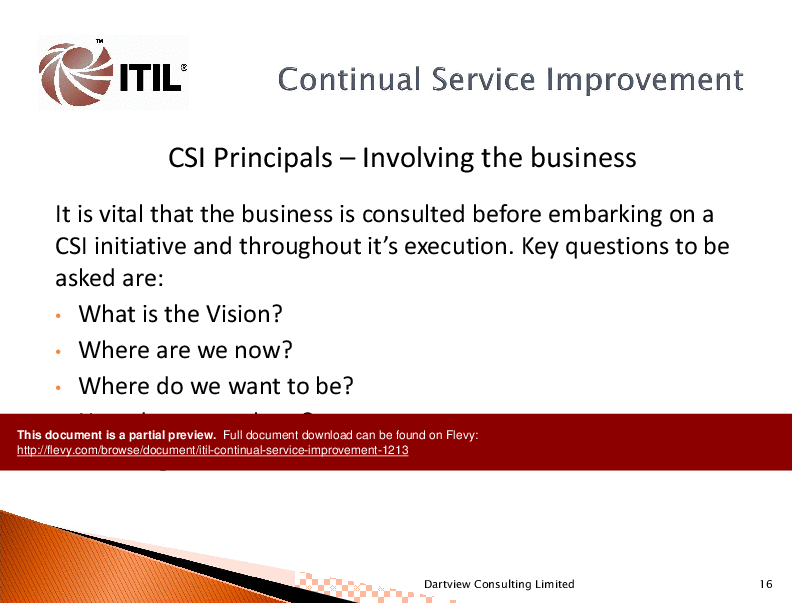
Begin by defining CSI objectives aligned with business goals, establish a baseline for current service performance, identify and prioritize improvement opportunities using gap analysis and benchmarking, and apply the Seven-Step Improvement Process to convert analysis into action. Start with establishing a baseline and the Seven-Step Improvement Process.

How can a process owner use RACI and gap analysis templates to drive CSI activities?

Process owners can use gap analysis to identify discrepancies between current and desired performance, then apply a RACI matrix to assign accountability for identified actions. Combine these with improvement action plans and reporting dashboards to track implementation and outcomes using the RACI matrix, gap analysis frameworks, and improvement action plans.

Document FAQ
These are questions addressed within this presentation.

What is the purpose of Continual Service Improvement (CSI)?
CSI aims to align IT services with changing business needs by identifying and implementing improvements to enhance service performance and customer satisfaction.

How does the ITIL framework support service management?
ITIL provides a structured approach to service management, offering best practices for planning, delivering, and supporting IT services effectively.

What are the key components of the Seven-Step Improvement Process?
The key components include identifying the strategy for improvement, defining what to measure, gathering and processing data, analyzing information, presenting findings, and implementing improvements.

What is the significance of Utility and Warranty in service delivery?
Utility refers to the functionality of a service (fit for purpose), while Warranty ensures that the service is delivered reliably (fit for use). Both are essential for creating customer value.

How can organizations measure service performance effectively?
Organizations should establish clear metrics and KPIs, conduct regular assessments, and utilize benchmarking to compare performance against best practices.

What challenges might arise during the implementation of CSI?
Challenges include lack of management commitment, inadequate resources, resistance to change, and insufficient knowledge transfer among teams.

What role does technology play in supporting CSI initiatives?
Technology provides tools for data collection, analysis, reporting, and monitoring, enabling organizations to implement and sustain improvements effectively.

How can organizations ensure stakeholder engagement in CSI efforts?
Engaging stakeholders involves clear communication of the vision for improvement, involving them in the decision-making process, and demonstrating the benefits of proposed changes.

Glossary
•  CSI - Continual Service Improvement, a framework for enhancing IT services.
•  Utility - The functionality of a service that meets customer needs.
•  Warranty - Assurance that a service is delivered reliably and consistently.
•  ITIL - Information Technology Infrastructure Library, a set of best practices for IT service management.
•  Benchmarking - Comparing organizational processes against best practices to identify improvement areas.
•  SWOT Analysis - A strategic planning tool assessing strengths, weaknesses, opportunities, and threats.
•  RACI Matrix - A tool for defining roles and responsibilities in project management.
•  Gap Analysis - A method for identifying the difference between current and desired performance levels.
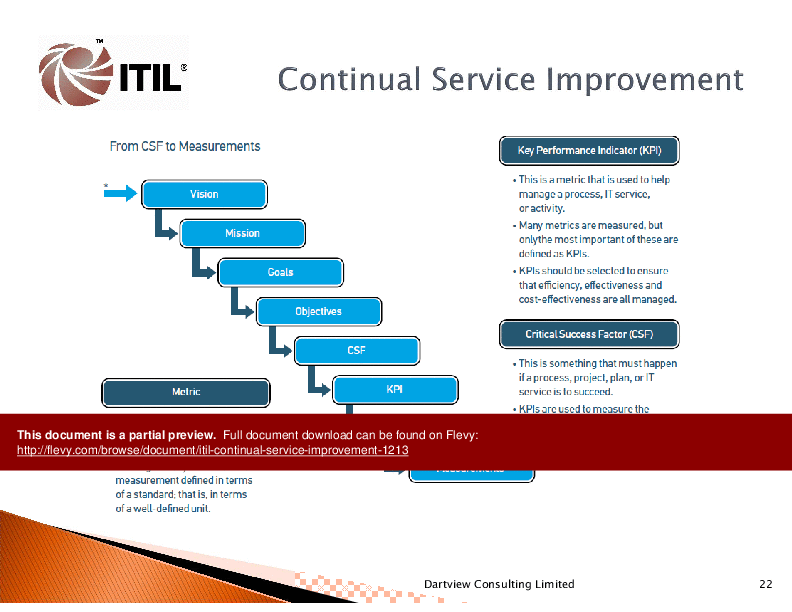
•  KPI - Key Performance Indicator, a measurable value that demonstrates how effectively an organization is achieving key objectives.
•  Service Life-Cycle - The stages a service goes through from conception to retirement.
•  Deming Cycle - A continuous quality improvement model consisting of Plan, Do, Check, and Act.
•  Stakeholder - An individual or group with an interest in the outcome of a project or initiative.
•  Data Analysis - The process of inspecting, cleansing, transforming, and modeling data to discover useful information.
•  Continuous Improvement - Ongoing efforts to improve products, services, or processes.
•  Service Knowledge Management System (SKMS) - A system that stores and manages service knowledge and information.
•  Critical Success Factors (CSFs) - Elements that are vital for an organization to achieve its mission.
•  Performance Metrics - Standards used to measure the efficiency and effectiveness of a service.
•  Service Level Agreement (SLA) - A contract that defines the level of service expected from a service provider.
•  Incident Management - The process of managing the lifecycle of incidents to restore normal service operation as quickly as possible.
•  Change Management - The process of managing changes to minimize disruption to IT services.

Source: Best Practices in ITIL PowerPoint Slides: ITIL Continual Service Improvement PowerPoint (PPTX) Presentation Slide Deck, Dartview Consulting


$65.00

Add to Cart
  

ABOUT THE AUTHOR

Additional documents from author: 19

Dartview Consulting, founded by Paul Smith-Allen, specializes in industry best practice frameworks, including ITIL, PRINCE2, and MOR.

Paul is a seasoned Change Professional certified in ITIL, PRINCE2, MSP, Lean 6 Sigma, Business Relationship Management and MOR with knowledge and experience established within the Construction, Utilities, Oil & Gas, Building Services, Facilities Management, and ... [read more]

Ask the Author a Question

You must be logged in to contact the author.

Click here to log in Click here register

Did you know?
The average daily rate of a McKinsey consultant is $6,625 (not including expenses). The average price of a Flevy document is $65.
Bundle and save! You can save up to % with bundles!

View bundle(s)


Trusted by over 10,000+ Client Organizations
Since 2012, we have provided business templates to over 10,000 businesses and organizations of all sizes, from startups and small businesses to the Fortune 100, in over 130 countries.
AT&T GE Cisco Intel IBM Coke Dell Toyota HP Nike Samsung Microsoft Astrazeneca JP Morgan KPMG Walgreens Walmart 3M Kaiser Oracle SAP Google E&Y Volvo Bosch Merck Fedex Shell Amgen Eli Lilly Roche AIG Abbott Amazon PwC T-Mobile Broadcom Bayer Pearson Titleist ConEd Pfizer NTT Data Schwab


Read Customer Testimonials

 
"As an Independent Management Consultant, I find Flevy to add great value as a source of best practices, templates and information on new trends. Flevy has matured and the quality and quantity of the library is excellent. Lastly the price charged is reasonable, creating a win-win value for "

– Jim Schoen, Principal at FRC Group
 
"As a consulting firm, we had been creating subject matter training materials for our people and found the excellent materials on Flevy, which saved us 100's of hours of re-creating what already exists on the Flevy materials we purchased."

– Michael Evans, Managing Director at Newport LLC
 
"I have found Flevy to be an amazing resource and library of useful presentations for lean sigma, change management and so many other topics. This has reduced the time I need to spend on preparing for my performance consultation. The library is easily accessible and updates are regularly provided. A wealth of great information."

– Cynthia Howard RN, PhD, Executive Coach at Ei Leadership
 
"I like your product. I'm frequently designing PowerPoint presentations for my company and your product has given me so many great ideas on the use of charts, layouts, tools, and frameworks. I really think the templates are a valuable asset to the job."

– Roberto Fuentes Martinez, Senior Executive Director at Technology Transformation Advisory
 
"FlevyPro has been a brilliant resource for me, as an independent growth consultant, to access a vast knowledge bank of presentations to support my work with clients. In terms of RoI, the value I received from the very first presentation I downloaded paid for my subscription many times over! The "

– Roderick Cameron, Founding Partner at SGFE Ltd
 
"Flevy.com has proven to be an invaluable resource library to our Independent Management Consultancy, supporting and enabling us to better serve our enterprise clients.

The value derived from our [FlevyPro] subscription in terms of the business it has helped to gain far exceeds the investment made, making a subscription a no-brainer for any growing consultancy – or in-house strategy team."

– Dean Carlton, Chief Transformation Officer, Global Village Transformations Pty Ltd.
 
"If you are looking for great resources to save time with your business presentations, Flevy is truly a value-added resource. Flevy has done all the work for you and we will continue to utilize Flevy as a source to extract up-to-date information and data for our virtual and onsite presentations!"

– Debbi Saffo, President at The NiKhar Group
 
"I am extremely grateful for the proactiveness and eagerness to help and I would gladly recommend the Flevy team if you are looking for data and toolkits to help you work through business solutions."

– Trevor Booth, Partner, Fast Forward Consulting


Save with Bundles

This document is available as part of the following discounted bundle(s):

Save %!
Best Practice (ITIL, Prince2, Risk)

This bundle contains 9 total documents. See all the documents to the right.

$50.00


Add Bundle & Save

Save %!
Everything ITIL!

This bundle contains 4 total documents. See all the documents to the right.

$80.00


Add Bundle & Save


Customers Also Bought These Documents


Customers Also Like These Documents

Explore Related Management Topics


Your Recently Viewed Documents
Download our FREE Digital Transformation Templates

Download our free compilation of 50+ Digital Transformation slides and templates. DX concepts covered include Digital Leadership, Digital Maturity, Digital Value Chain, Customer Experience, Customer Journey, RPA, etc.









